Why Brand Matters More Than Ever for Product Ads
Soldy Team·March 25, 2026·7 min read
When every competitor can make more ads, the advantage shifts. The winner is not always the brand with the most creative. It is the brand whose creative is easiest to recognize and trust.
Why brand matters for product ads is a 2026 question because AI has made production faster while making sameness easier. If products, templates, hooks, and visuals converge, brand becomes the signal that helps a buyer remember and choose.
The Brand Age Argument
In March 2026, Y Combinator co-founder Paul Graham published "The Brand Age". His argument uses the Swiss watch industry as a central example: when technology reduced the practical difference between products, brand became more important.
The exact lesson for advertising is not "ignore product quality." It is the opposite. Product quality becomes the entry ticket. Once competitors can match features, speed, or materials, the brand has to carry more of the decision.
Think of bottled water. The physical product may be similar across brands, but the bottle, context, story, and social meaning change what people choose. Product ads work the same way.
AI Makes Brand Consistency Harder and More Important
AI tools make it easier to produce video ads, images, hooks, avatars, and product demos. That is useful. It also creates a new failure mode: a brand can produce more assets that feel less like itself.
Common symptoms:
- one ad looks cinematic, another looks like a template
- UGC scripts use a voice the brand would never use
- product claims drift across variants
- different channels make the brand feel fragmented
- AI-generated visuals ignore the product's real selling point
This is like a choir where every singer is talented but no one follows the same key. Volume increases, but the signal gets noisy.
What Brand Actually Does in a Product Ad
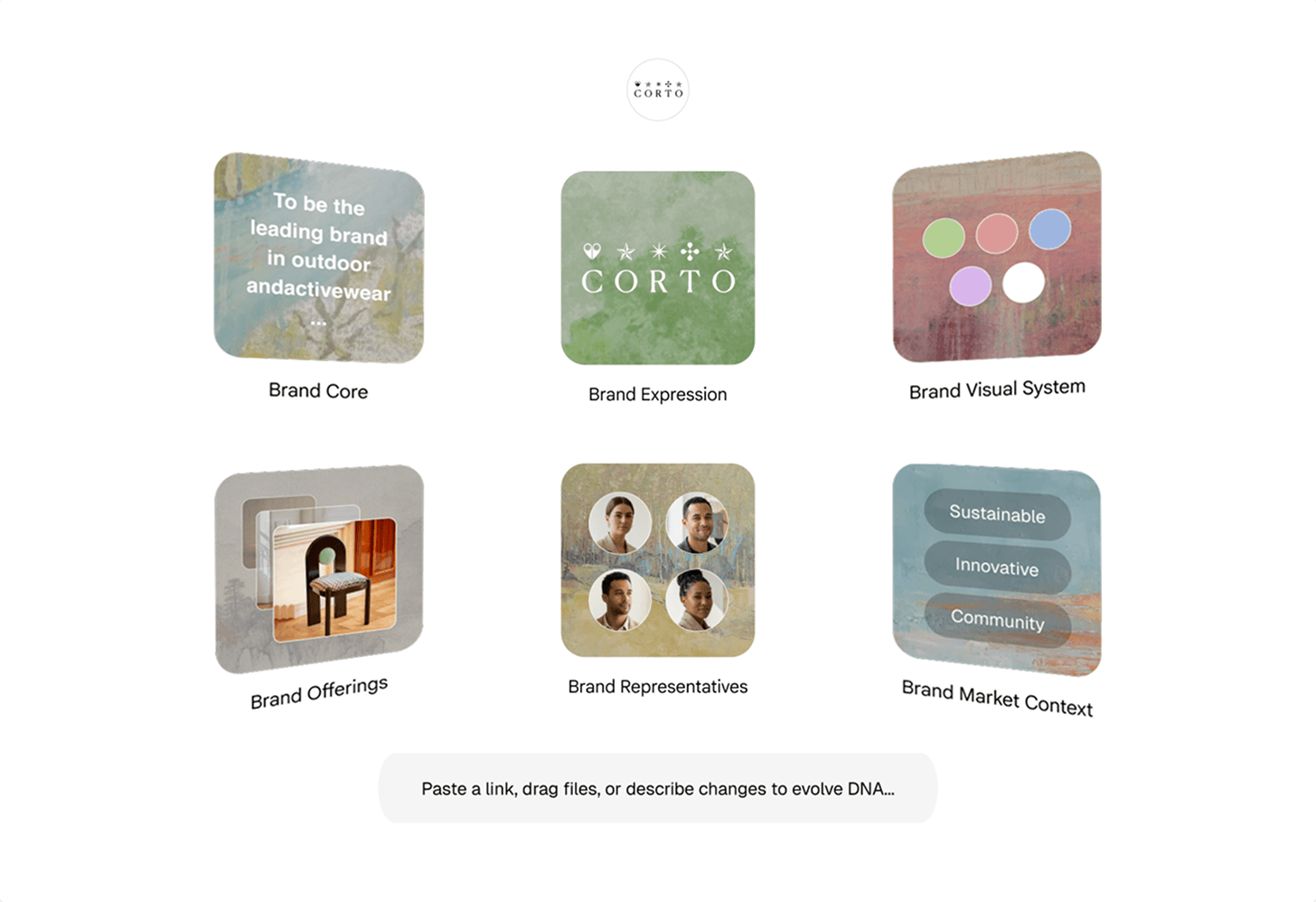
Brand is not only logo placement. In a product ad, brand shows up through:
| Brand layer | What it controls |
|---|---|
| Visual identity | Color, lighting, type, composition, product framing |
| Voice | How the brand speaks about problems, proof, and offers |
| Promise | What the product repeatedly stands for |
| Category position | Whether the brand feels premium, practical, playful, expert, or rebellious |
| Proof style | Whether the ad relies on demonstration, craft, data, social proof, or founder authority |
If these layers change randomly, every ad becomes a separate first impression. That is expensive because the audience has to relearn the brand each time.
Performance Marketing Needs Brand Too
Performance teams often treat brand as a later problem. That is risky. Paid social creative is not just a conversion unit. It is repeated exposure. Even when an ad does not convert immediately, it teaches the viewer what the brand looks and sounds like.
Brand consistency can also improve testing. If every variant follows the same brand system, the team can compare hooks, offers, and product proof more cleanly. If every variant looks like a different company, performance differences become harder to interpret.
Think of testing like tasting coffee. If every cup uses a different bean, water temperature, roast, and cup size, you cannot tell what changed the flavor. Brand guardrails keep the cup consistent while the team tests the recipe.
Where AI Ad Tools Fit
Not every AI ad tool handles brand the same way.
| Tool category | Brand risk | Better use |
|---|---|---|
| Generic prompt-to-video | High if prompts are loose | Early ideas and rough drafts |
| Avatar tools | Medium if presenter tone drifts | Spokesperson, explainers, localization |
| Product-led generators | Medium if product proof is clear | SKU-level product ads and social variants |
| Brand-aware workflows | Lower when assets and rules are strong | Repeatable ad systems across products |
The point is not to avoid AI. The point is to make AI operate inside a brand system.
How to Audit Brand Drift
Run a simple audit across the last 20 ads. Remove performance metrics at first and look only at recognition. Do the ads share a visual world? Do they use the same kind of proof? Do they speak with the same level of confidence? Would a viewer know these ads came from the same company if the logo were hidden?
Then add performance data back in. If the winning ads all break the brand system, the system may be too rigid or the performance team may be optimizing for short-term novelty. If the most on-brand ads never perform, the brand expression may be beautiful but not commercially sharp enough.
The goal is not sameness. A brand can have range. The goal is coherence, like a playlist where every song is different but the mood still makes sense.
Where Soldy Fits
Soldy is relevant because its product workflow is built around product assets and brand context, not just a blank prompt. Soldy Marketing Studio publicly describes product photos, avatars, modes, and 15-second commercial video generation. The larger brand argument is that those assets should not be generated as isolated clips. They should reinforce the same visual and commercial identity across variants.
That makes the workflow useful for brands that want more ad volume without turning every output into a different style experiment. The product still has to be good. The ad still has to make a real claim. But the brand system keeps the creative from drifting.
Brand-Safe Ad Checklist
Product promise
Write the one thing the product should be remembered for.
Proof style
Choose demonstration, comparison, founder explanation, review, or visual transformation.
Brand cues
Keep color, tone, typography, product framing, and claim boundaries consistent.
Controlled variants
Change hook, scene, or format while preserving the same brand system.
Recognition test
Ask whether the ad would still be identifiable if the logo disappeared.
FAQ
Why does brand matter more for product ads now?
AI and ecommerce tools make production faster and product differences easier to imitate. Brand helps a buyer recognize, remember, and trust the product when the category becomes crowded.
What did Paul Graham argue in The Brand Age?
Paul Graham's March 2026 essay argues that brand becomes more important as technology reduces substantive product differences. His Swiss watch example shows how brand can become the remaining differentiator.
Does brand matter for performance ads?
Yes. Performance ads are repeated brand exposures. If each ad looks and sounds different, the account may generate clicks while weakening long-term recognition.
Can AI-generated ads stay on brand?
Yes, but only with guardrails: approved claims, visual references, product proof rules, tone guidance, and a review process. A blank prompt is not enough.
What is the best way to review brand consistency?
Remove the logo mentally and ask whether the ad still feels like the company. Then check whether product framing, tone, proof style, and CTA match the brand's normal behavior.
Conclusion
AI makes ad production faster, but speed without brand discipline creates noise. In the Brand Age, the product ad has to sell and reinforce memory at the same time. For product-led ad variants inside a brand-aware workflow, explore Soldy Marketing Studio.
Ready to Create with Marketing Studio?
Drop a link, photo, or PDF — get a cinematic video ad in minutes.
Generate My First Ad