Top Tools for Creating Shoppable UGC Videos for Facebook Ads
Soldy Team·July 20, 2026·7 min read
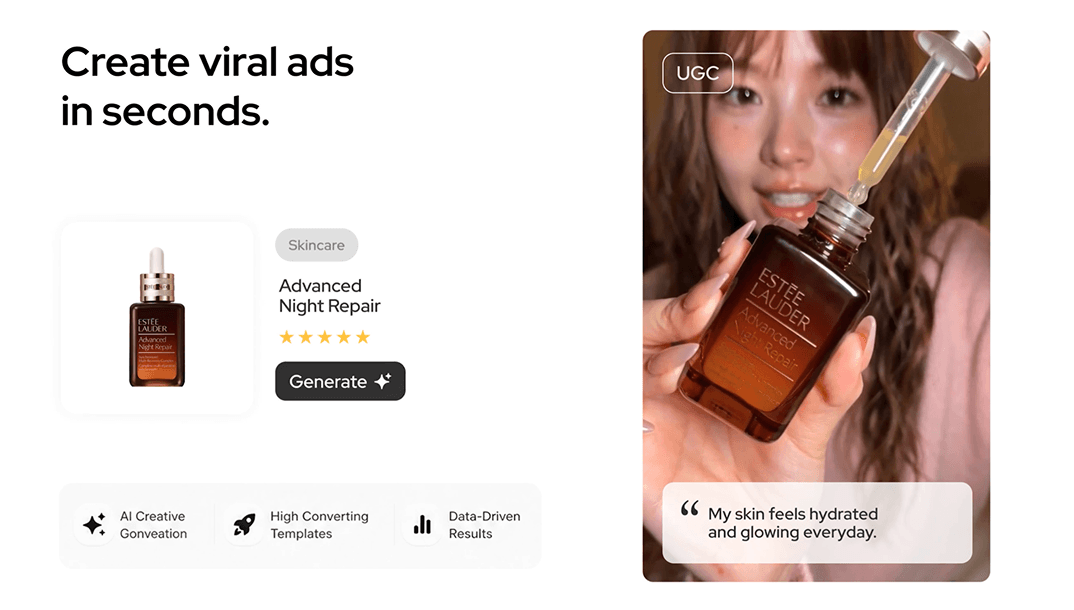
A shoppable Facebook ad fails in a very specific way: people may watch it, but they still do not know what to buy. The video feels like content, the landing page feels like commerce, and the handoff between the two is weak.
Tools for creating shoppable UGC videos for Facebook Ads are AI video platforms, avatar tools, and product-video workflows that turn a product page, product asset, or script into creator-style ads built for Meta placements. The best tool is not the one with the most templates. It is the one that keeps product proof, offer clarity, and catalog alignment visible.
What Makes This Search Different
Someone searching this phrase is not asking for a generic UGC definition. They likely manage Meta campaigns, have a product catalog or landing page, and need faster ad variations without booking creators for every SKU.
That is why the word "shoppable" matters. A shoppable UGC ad must do three jobs at once:
- stop the scroll with a human or creator-style opening
- show the product clearly enough to build purchase confidence
- make the next click feel obvious, whether that click goes to a product page, shop, lead form, or catalog experience
Meta's official business help content separates ordinary video creative from commerce and creator workflows. Its catalog ads documentation describes product-catalog based ad delivery, while its partnership ads documentation explains how brands can run creator or partner content with permission. Those two public product directions explain the opportunity: UGC-style creative works best when it is tied back to a real product system, not treated as loose social content.
Think of it like a store display. A mannequin can create attention, but the price tag, product placement, and aisle sign still need to tell the shopper what to do next. If the item is unclear, the click is weaker no matter how polished the cut is.
Real AI Tools Worth Comparing
The products below are real AI or AI-assisted tools that appear in the UGC, avatar, product-video, or ad-generation market. The point is to understand which workflow each tool is built around.
| Tool | Public positioning | Strong use case | Watch out for |
|---|---|---|---|
| Creatify | AI ad generator for creating video ads from product inputs | Fast product-to-ad variants, URL-driven ad workflows, social ad testing | Output still needs review for claim accuracy, product fit, and brand voice |
| Arcads | AI actors and UGC-style ad videos | Talking-head UGC ads where a realistic presenter reads a script | Better for presenter delivery than deep product demonstration |
| HeyGen | AI avatar video platform with avatars and localization workflows | Spokesperson videos, multilingual presenter-led ads, controlled narration | Not every ecommerce SKU needs a talking avatar |
| Synthesia | Enterprise AI avatar and video platform | Training, internal enablement, explainers, polished avatar communication | Often less native for performance UGC feeds unless adapted carefully |
| Captions | AI creative and video tools, including AI ad creation workflows | Quick social creative, creator-style editing, short-form ad production | Teams still need a clear product brief and funnel logic |
| Predis.ai | AI social media and ad creative generation for ecommerce and marketing | Product-based social posts, ads, and ecommerce creative at scale | More useful for social content systems than deep video testing alone |
| InVideo AI | AI video creation and editing from prompts and scripts | Broad video ad creation, repurposing, and fast production | Broad tools may need stronger creative direction for UGC specificity |
| Pippit | Ecommerce-focused AI creative and product video workflows | Product videos and commerce creative for online sellers | Confirm platform fit and export workflow before building a Meta process around it |
A practical buyer should not treat these as identical. Creatify and Predis are closer to product or commerce creative generation. Arcads and HeyGen are stronger when the human presenter is the point. Captions and InVideo are useful when the team needs flexible short-form production.
Best Tools by Facebook Ad Job
1. Product-page-to-video ads
If the team has many SKUs, the first question is whether the tool can ingest product information. Creatify, Predis.ai, and Pippit are relevant category fits because they are positioned around product or ecommerce creative.
The risk is that product-page-to-video tools can over-summarize the product. A product page might contain twenty claims, but a Facebook ad needs one buying reason.
2. Talking-head UGC ads
For ads that need a human face, Arcads and HeyGen are stronger candidates. Arcads is positioned around AI actors for UGC-style ads. HeyGen is stronger in avatar and localization workflows.
The limitation is product proof. A talking head can explain, but it cannot replace a close product shot, use case, or before-and-after moment.
3. Flexible short-form ad production
Captions and InVideo AI fit teams that already know the creative direction and need fast editing, scripting, or short-form output.
Use them when the bottleneck is production. Do not use them to avoid strategy.
How Meta-Specific Requirements Change the Tool Choice
Facebook and Instagram placements punish vague creative. The product has to be understood quickly, especially when the click leads to a product surface.
That means a shoppable UGC stack has to connect the SKU, the buyer trigger, the creative format, and the destination page. If any one of those pieces drifts, the ad may look good but send low-intent clicks.
This is where many tools disappoint. They generate a video, but they do not protect the test.
Where Soldy Fits in the Stack
Soldy Marketing Studio should be evaluated as a product-led UGC workflow rather than a generic avatar tool. The public Marketing Studio page describes a workflow built around product photos, avatars, modes, and 15-second commercial videos.
In practice, that makes Soldy a better fit when the team wants to turn a product asset into a structured UGC-style ad and keep testing around the same product proof. It is not the same job as a pure talking-head generator.
Shoppable UGC Buying Criteria
SKU clarity
Do not begin with "make UGC." Begin with the product that needs sales lift.
Purchase trigger
Pick one reason the buyer should care: price, convenience, pain relief, upgrade, giftability, or social proof.
Format fit
Use a product-video tool for demos, an avatar tool for presenter-led explanation, and a flexible editor when the raw creative direction is already clear.
Destination-page match
The ad should not promise a discount, use case, or bundle that the page cannot support.
Testing discipline
Change the hook, presenter, or proof shot. Do not change all three in one test.
FAQ
What is the best tool for creating shoppable UGC videos for Facebook Ads?
There is no single best tool for every team. Creatify, Predis.ai, and Pippit are stronger fits for product-led ecommerce creative; Arcads and HeyGen are stronger for presenter-led UGC; Captions and InVideo AI are useful for flexible short-form production.
Do shoppable UGC videos need AI avatars?
No. Avatars help when the ad needs controlled delivery or many presenter variants, but many shoppable UGC ads work better as product-first demos, reviews, or before-and-after clips.
What does Meta officially support for commerce-style ads?
Meta documents catalog-based ad products such as catalog ads and creator-based formats such as partnership ads. Those official directions are useful signals: commerce creative should connect product data with credible social context.
How many variants should I make for a first test?
Start with three to five variants around one product and one claim. That is enough to compare hooks or presenters without turning the test into a messy creative dump.
Can AI-generated UGC replace real creators?
It can replace some production tasks, especially first-pass testing and presenter variation. It does not replace real customer insight, offer strategy, or the need to verify product claims.
Conclusion
The best shoppable UGC tool is the one that keeps the product easy to buy, not just easy to watch. If you want a product-led path rather than a blank video prompt, start with Soldy Marketing Studio and build UGC variants around a real SKU.
Ready to Create with Marketing Studio?
Drop a link, photo, or PDF — get a cinematic video ad in minutes.
Generate My First Ad