Soldy vs Creatify: Which AI Ad Tool Fits Your Workflow?
Soldy Team·March 24, 2026·7 min read
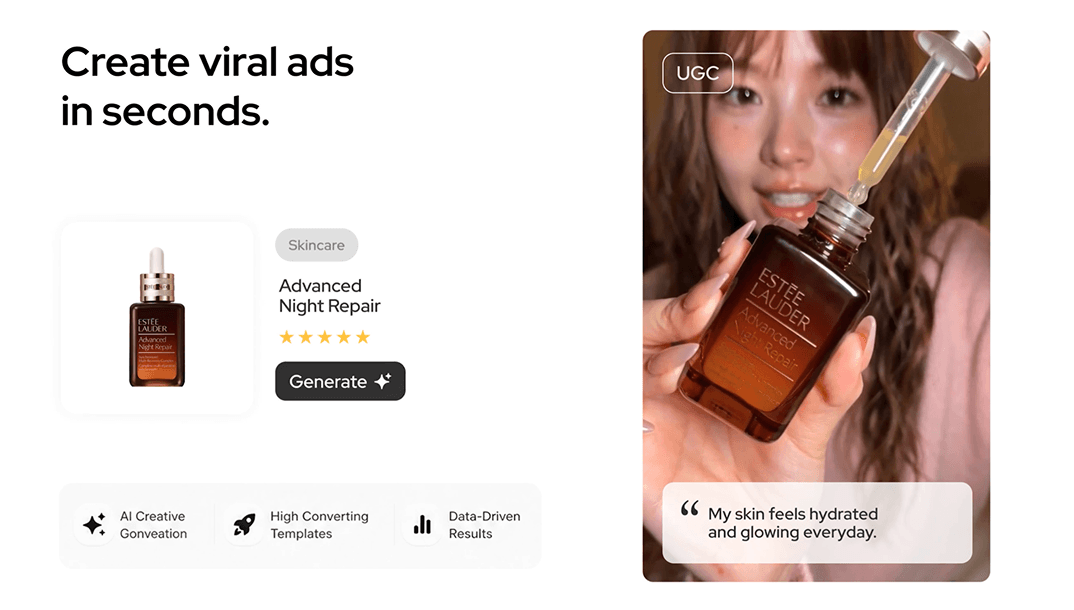
Soldy and Creatify are easy to compare badly. Both can help teams make video ads with AI, but they are built around different production instincts.
Soldy vs Creatify is a comparison between a product-led AI marketing studio and an AI ad generator focused on fast ad creation from product inputs. The better choice depends on whether your team needs brand-shaped product scenes, high-volume performance variants, or both.
The Category Difference
Creatify is publicly positioned as an AI ad generator for creating video ads. It is relevant when a marketer wants to turn product information into many ad concepts quickly.
Soldy Marketing Studio is publicly positioned around product photos, avatars, modes, and 15-second commercial videos. It is relevant when the product and brand presentation need to stay tightly connected.
Think of Creatify like a fast ad production line. Think of Soldy like a product-focused studio bench. One emphasizes volume and ad generation. The other emphasizes product-led commercial structure.
Feature Comparison
| Decision point | Soldy | Creatify |
|---|---|---|
| Primary workflow | Product-led commercial video generation | AI video ad generation from product inputs |
| Best input | Product photos, brand context, modes, product proof | Product URL, product information, ad prompt |
| Best output | Product-centered commercial variants | Fast social ad variations |
| Strongest use case | Brand-consistent product ads | High-volume performance creative |
| Main risk | Needs a clear creative brief | Output needs brand and claim review |
| Best buyer | Brand/ecommerce team needing product-led scenes | Performance team needing rapid variants |
Both tools can belong in the same stack. The important question is where the bottleneck sits.
When Creatify Is the Better Fit
Choose Creatify when the team wants fast ad ideation from product inputs. It is a good candidate for:
- high-volume social ad testing
- product-page-to-video workflows
- fast hook and format exploration
- early performance creative drafts
- ecommerce teams that need many ads quickly
The review burden is important. A generated ad still needs human review for product claims, pricing, legal language, brand tone, and landing-page match. Fast output is useful only if the team can approve and organize it.
When Soldy Is the Better Fit
Choose Soldy when the ad needs a stronger product and brand frame. It is useful for:
- product-led commercial videos
- SKU-level ecommerce ads
- brand-consistent social assets
- UGC-style or avatar-supported product variants
- product proof scenes where the item should stay central
The advantage is not simply that Soldy generates video. It is that the workflow begins with product assets and modes, which helps prevent the ad from becoming a generic prompt output.
How to Run a Fair Test
Do not compare the best public demo from one tool with a quick prompt in the other. Use the same benchmark brief:
- product page or product photo
- one buyer problem
- one claim
- one proof moment
- one channel
- one CTA
Ask each tool for three variants. Then score product accuracy, brand fit, revision speed, and whether the second round improves cleanly.
This is like testing two coffee machines with the same beans. If you change the beans, grind, water, and cup at once, you are not comparing machines anymore.
Where Soldy and Creatify Can Work Together
A performance team might use Creatify for broad volume testing and Soldy for product-led variants that need a stronger brand or commercial feel. A brand team might use Soldy for core product ads and Creatify for quick exploratory angles.
The two workflows become risky only when the team treats all generated videos as interchangeable. Label each asset by hypothesis, product, and tool. That makes the learning loop clearer.
Practical Examples
For a store with 80 SKUs and a need for quick first-pass creative, Creatify can be useful because the work starts from product information and moves quickly into ad variations. The team should still review claims, product visuals, and brand tone before launch.
For a hero product where brand perception matters, Soldy may be a better first stop. The team can build product-led variants that preserve a clearer commercial scene and brand feel instead of only chasing volume.
For a performance team, the strongest stack may include both. Use Creatify to widen the search space. Use Soldy to develop product-led variants around the ideas that deserve higher-quality creative attention.
That division keeps each tool in its lane. Volume helps discovery. Product-led craft helps turn a discovered idea into a stronger ad system.
Review Checklist
Score both tools against the same operational questions:
| Review question | Why it matters |
|---|---|
| Does the product remain accurate? | AI ad tools can make plausible but wrong product claims |
| Can the team control the hook? | Testing needs comparable variants, not random changes |
| Does the output feel brand-safe? | Volume can create brand drift if no one reviews tone and visuals |
| Is the second round faster? | Real value appears when revisions become easier |
If Creatify produces more ideas but Soldy produces cleaner product scenes, the right answer may be a split workflow. If one tool handles both volume and quality for your category, choose the simpler stack.
Common Mistakes
Do not choose Creatify only because it can produce many videos. Volume matters only when the team can label, review, and learn from the variants. Do not choose Soldy only because the output feels more polished. A beautiful product ad still needs a testable hypothesis.
The practical buyer should ask which tool reduces the next bottleneck. If the bottleneck is "we do not have enough angles," go wider. If the bottleneck is "our ads do not look or feel like our product," go deeper.
Decision Checklist
Bottleneck
Is the team short on volume, product proof, brand consistency, or revision speed?
Benchmark product
Use one SKU with clear photos and a specific claim.
Comparable variants
Ask both tools for the same channel and CTA.
Second-round quality
Revision quality matters more than first-output polish.
Operating model
Pick the tool that your team can use repeatedly without adding review chaos.
FAQ
What is the main difference between Soldy and Creatify?
Soldy is a product-led AI marketing studio for commercial video variants. Creatify is an AI ad generator focused on fast video ad creation from product inputs.
Is Creatify better for high-volume ad testing?
Creatify is a strong candidate when volume and fast ad generation are the main bottlenecks. Teams still need claim review and brand control.
Is Soldy better for brand-consistent product ads?
Soldy is more relevant when the product, brand context, and commercial scene need to stay connected across variants.
Can I use both Soldy and Creatify?
Yes. Use Creatify for broad performance exploration and Soldy for product-led brand variants, as long as each asset is labeled by hypothesis.
How should I test Soldy vs Creatify?
Use the same product, claim, proof moment, channel, and CTA in both tools. Compare first output, revision quality, product accuracy, and launch readiness.
Conclusion
Soldy vs Creatify is a choice between workflows, not just features. If your team needs product-led commercial variants with brand context, start with Soldy Marketing Studio. If the bottleneck is rapid volume, Creatify also deserves evaluation.
Ready to Create with Marketing Studio?
Drop a link, photo, or PDF — get a cinematic video ad in minutes.
Generate My First Ad