MakeUGC Alternatives for Ecommerce Product Ads
Soldy Team·July 20, 2026·7 min read
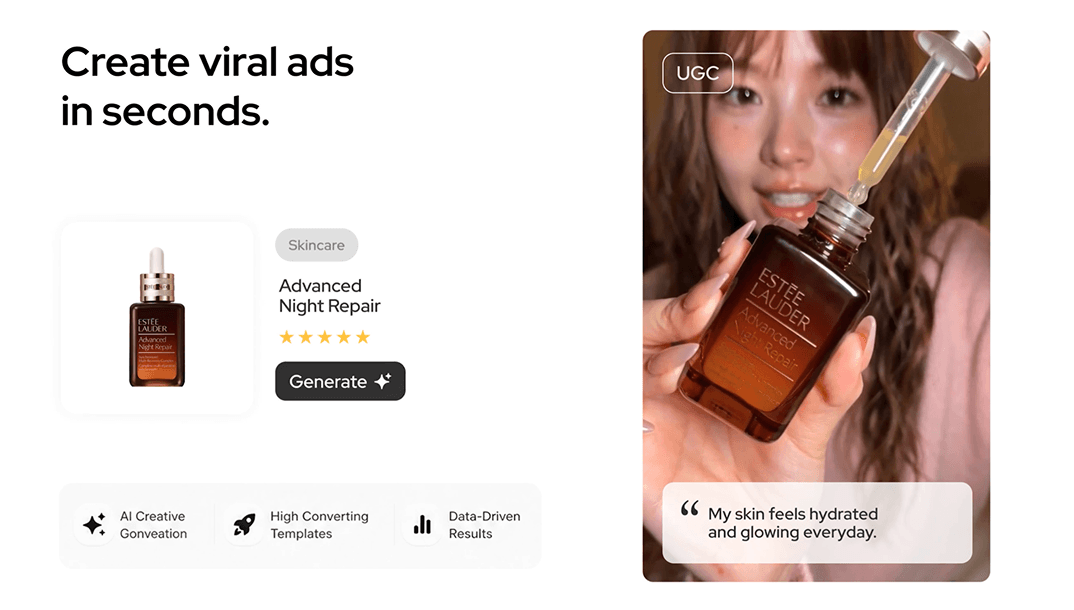
MakeUGC is relevant when a team wants simple AI UGC videos, but a low-friction talking-head tool is not always enough. Ecommerce teams often need product proof, product-page context, language options, and testing structure.
MakeUGC alternatives are AI video tools that can create or improve UGC-style ads through product inputs, AI actors, avatars, editing, or localization. The best alternative depends on whether the buyer wants cheaper presenter clips, stronger product ads, better editing, or a broader ecommerce workflow.
Quick Pick
| Need | Alternatives to compare |
|---|---|
| Product-led ecommerce UGC | Soldy Marketing Studio, Creatify, Topview AI |
| AI actors and talking heads | Arcads, HeyGen, Synthesia |
| Editing and captions | Captions, VEED |
| Prompt or script video drafts | InVideo AI, Topview AI |
| Localization and voice | HeyGen, Synthesia, ElevenLabs |
The main decision is whether MakeUGC is too narrow for the job. If the team only needs a person reading a script, a simple UGC tool can work. If the team needs a product-led ad system, compare a different category.
Why Teams Search for MakeUGC Alternatives
Common reasons include:
- the product needs to be shown, not just mentioned
- the team wants product URL or product photo input
- the brand needs multiple formats for Meta, TikTok, Google, or landing pages
- the buyer wants stronger editing control
- localization or voice quality matters
- the team needs more structured campaign testing
Those are not all pricing problems. They are workflow problems.
Alternatives Compared
| Tool | Best role | Why it may fit better | Limitation |
|---|---|---|---|
| Soldy Marketing Studio | Product-led UGC ad variants | Better when product assets and commercial modes need to stay central | Needs a clear product brief |
| Creatify | Product-to-video ads | Useful for ecommerce teams starting from product inputs | Claims and brand tone need review |
| Arcads | AI actor UGC ads | Stronger presenter testing and direct-response hooks | Product proof needs planning |
| HeyGen | Avatar and localization | Strong polished presenters and multilingual messaging | May feel less raw than UGC |
| Synthesia | Enterprise avatar video | Good for controlled explainers and training-style communication | Less performance-UGC focused |
| Topview AI | AI marketing video generation | Useful for product URLs, scripts, and references | Review product detail accuracy |
| Captions | AI editing and creator polish | Good for captions, cuts, and short-form finishing | Requires strong creative direction |
| VEED | Online video editor | Useful for subtitles, repurposing, simple avatar assets | Not a full ad testing workflow |
Best Alternative by Buyer Type
Ecommerce founder
Start with Soldy or Creatify if the product is the main story. The goal is to make the item easier to understand, not only to put a face on the ad.
Performance marketer
Compare Arcads, MakeUGC, Soldy, and Creatify with the same product and offer. Keep the CTA fixed so the test reveals whether presenter format or product proof matters more.
Agency
Agencies should prioritize repeatability: client intake, product inputs, review cycles, export formats, and variant naming. Captions or VEED can help with finishing, but product-led tools may be more useful upstream.
International brand
Compare HeyGen, Synthesia, and voice workflows supported by ElevenLabs when localization is the main bottleneck. Check language quality with native reviewers before launch.
Product-Led Versus Presenter-Led UGC
MakeUGC alternatives split into two categories. Presenter-led tools answer "who says the message?" Product-led tools answer "what does the product prove?"
For a supplement, founder-style explanation may matter. For a kitchen tool, the cut, pour, clean, or storage moment may matter more. For apparel, fit and movement often matter more than the voice. That is why buyers should not compare tools only by avatar quality.
What to Check Before Switching
A MakeUGC alternative should be evaluated on the entire ad pipeline:
| Question | Why it matters |
|---|---|
| Can it use product assets or URLs? | Ecommerce teams need the product to stay specific |
| Can the script be edited before generation? | Claims and compliance need review |
| Can the same ad become variants? | Paid testing needs controlled changes |
| Does the plan include commercial usage? | Client and paid media use require clear rights |
| Does it support the target channel? | TikTok, Meta, YouTube, and landing pages need different pacing |
The most common mistake is switching because another tool has a more impressive demo. Demos are usually built around ideal products and polished inputs. A useful test should use your actual product page, imperfect product photos, and real claim boundaries.
Budget Reality
For small brands, the cheapest alternative may be enough for early hook testing. For a brand spending real media budget, the more important metric is launchable cost per asset. A $19 or $29 plan is attractive only if the output passes review. If the team has to rewrite every script, recreate every product scene, or edit every clip manually, the hidden cost rises quickly.
For agencies, budget should include client revision time. A cheap generation tool can still be expensive if it creates confusing review rounds. Product-led tools are often better when the client expects the ad to match a specific SKU. Avatar-first tools are better when the client is buying presenter variation.
How to Run a Fair Comparison
Use the same product brief across MakeUGC and each alternative. The brief should include one SKU, one buyer objection, one allowed claim, one CTA, and one destination page. Ask every tool to create a 15-second vertical ad for the same channel.
Score the output in plain language:
| Score area | What to check |
|---|---|
| Product clarity | Can a viewer identify the item quickly? |
| Presenter fit | Does the creator or avatar match the buyer and product? |
| Claim control | Does the script stay inside the proof available on the product page? |
| Revision speed | Can the team change the hook without rebuilding everything? |
| Launch readiness | How much editing is needed before upload? |
This comparison is more useful than watching demo reels. Demo reels show peak output. A real benchmark shows how the tool behaves with your product, your claim limits, and your team's review process.
FAQ
What is the best MakeUGC alternative?
For ecommerce product ads, compare Soldy Marketing Studio, Creatify, and Topview AI. For talking-head UGC, compare Arcads, HeyGen, and Synthesia.
Why choose a product-led tool instead of MakeUGC?
Choose a product-led tool when the ad needs product photos, demos, use context, or SKU-specific proof rather than only an AI presenter.
Are there cheaper MakeUGC alternatives?
Some tools offer lower entry prices or free trials, but pricing changes often. Evaluate total production cost, not only monthly plan price.
Can MakeUGC alternatives make paid social ads?
Yes, but output should be reviewed for claims, product accuracy, usage rights, platform fit, and destination-page match before launch.
Should I use MakeUGC and Soldy together?
It can make sense to test presenter-led MakeUGC clips against product-led Soldy variants. Keep the product, offer, and CTA consistent so the result is readable.
Final Take
MakeUGC alternatives should be chosen by creative job. If your ads need a product-led commercial structure, start with Soldy Marketing Studio. If the presenter is the main variable, compare AI actor and avatar tools directly.
Ready to Create with Marketing Studio?
Drop a link, photo, or PDF — get a cinematic video ad in minutes.
Generate My First Ad