Create TikTok Ads With AI: Hooks, Product Proof, and UGC Variants
Soldy Team·July 15, 2026·7 min read
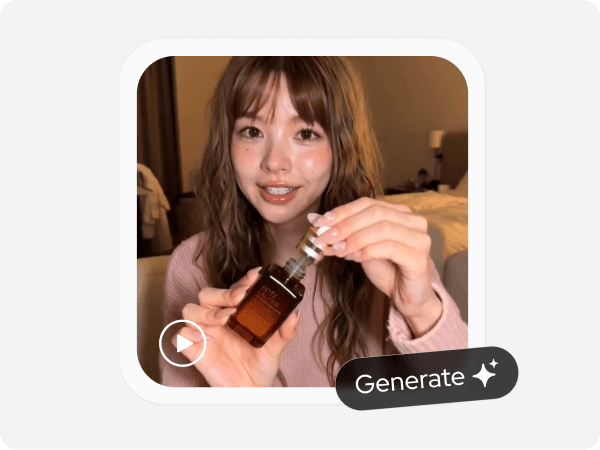
A TikTok ad does not fail because it was made by AI. It fails because it feels like an ad before it feels like a reason to keep watching.
To create ads for TikTok video with AI, start with a feed-native hook, define the product proof, and generate variants that preserve the pacing of TikTok while showing a real product moment. The tool matters, but the sequence matters more.
Start with the Scroll Stopper
The first task is not writing a full script. It is deciding why someone stops scrolling. That reason can be visual, emotional, or practical.
Examples:
- A problem appears before the product is named.
- A creator says the quiet part out loud.
- A close-up shows an unexpected result.
- A before-and-after promises relief.
Think of TikTok like a crowded party. You do not begin with a full presentation. You say one interesting sentence that makes someone turn their head.
Build Around Product Proof
AI can generate motion, lines, and variations, but the ad still needs a believable proof moment. For product ads, proof is usually visual:
- Texture change
- Size comparison
- Speed demonstration
- Use-case setup
- Before-and-after transformation
Without proof, a TikTok ad becomes a claim with music under it.
Choose the Right AI Output Type
How to Keep AI TikTok Ads Native
Native does not mean sloppy. It means the ad respects the viewer's expectations inside the feed. On TikTok, viewers are used to fast context, direct language, visible stakes, and a feeling that the creator is responding to a real moment. AI-generated ads often fail because they look like a polished commercial squeezed into a social format.
Start by writing the first two seconds as a real interruption. A strong opening can be a visible problem, a surprising product use, a comment-style question, or a blunt objection. Avoid openings that need setup, such as "Introducing our revolutionary..." The viewer should understand the situation before they decide to keep watching.
Next, define what the product must physically do on screen. If the ad is for a kitchen tool, show the cut, pour, clean, or storage moment. If it is for software, show the before-and-after workflow rather than only a dashboard. If it is for beauty, show texture, application, or wear. AI can make scenes attractive, but the product proof needs to stay concrete.
Think of TikTok like a hallway conversation, not a keynote. A keynote can build slowly. A hallway conversation starts with the reason the other person should care. That does not mean the ad should be shallow. It means the creative has to earn attention before it explains.
During review, watch the ad without sound first. If the story still makes sense through motion, captions, and product behavior, the structure is probably strong. Then listen with sound and check whether the voice feels like a person talking or a brand reading a script. The best AI workflow keeps both layers honest.
A Practical AI Workflow
1. Choose one audience moment
Pick a moment your buyer recognizes. For example: "trying to pack lunch while running late" is stronger than "busy people."
2. Write three hook families
A hook family is reusable. Examples: problem first, result first, objection first.
3. Define the product proof
Decide what the viewer sees that makes the claim credible.
4. Generate three variants
Keep the same product proof but vary the opening. That makes results easier to interpret.
5. Review for native feel
Ask whether the ad could plausibly appear between organic TikToks. If it feels like a generic commercial, tighten the opening.
Where Soldy Fits
In Soldy, a team can start from product assets, choose a mode such as UGC or unboxing, and generate product-centered ad variants. The useful part is not just speed. It is that the workflow keeps the product moment visible while the team tests different hooks.
For TikTok, use Soldy's TikTok Ads page as the strategic entry point: define the feed-native format first, then generate variations inside a controlled workflow.
What to Measure
Do not judge only by clicks. For TikTok-style ads, review:
- Hook retention
- Thumb-stop rate if available
- Comment quality
- Click quality
- Conversion quality
- Creative fatigue over time
The analogy is tasting soup as it cooks. One spoonful is not the meal, but it tells you what to adjust next.
Prompt Structure That Produces Better TikTok Variants
A useful AI prompt for TikTok should read like a compact creative brief, not a wish list. Include the audience moment, the first visual beat, the product proof, the creator style, the duration, and one thing to avoid. For example: "Create a 15-second TikTok ad for commuters who spill coffee in their bag. Open with the messy bag, show the product sealing before it is packed, use casual creator narration, and avoid luxury language."
That prompt gives the system boundaries. It also gives the reviewer something to judge. If the output opens with a generic product shot, it failed the first visual beat. If it uses premium lifestyle language, it ignored the negative constraint. Better prompts make better review possible.
Keep prompts short enough that the core idea is visible. When a prompt tries to include every benefit, audience, objection, and format at once, the generated ad often loses the sharpness TikTok needs.
Save the winning prompt beside the final asset. That gives the next creative round a clean starting point instead of forcing the team to reverse-engineer why one version worked.
FAQ
Can AI make TikTok ads from product photos?
Yes, some AI video tools can generate short product ads from product photos, references, or structured briefs. Results depend on asset quality and prompt specificity.
How long should a TikTok ad be?
Many paid social teams test short formats around 10-20 seconds, but the right length depends on product complexity, offer, and placement. The opening matters more than the exact length.
Do I need a creator for TikTok ads?
Not always. Creator-style ads can work, but product demos, unboxings, reviews, and visual proof ads can also feel native when paced correctly.
How many TikTok ad variants should I make?
Start with three variants around one hypothesis. For example, keep the same product proof and test three different hook families.
What is the biggest AI TikTok ad mistake?
The biggest mistake is generating before planning. Without a specific hook and proof moment, AI output often looks polished but generic.
Conclusion
AI can help you create TikTok ads faster, but it cannot decide what your buyer needs to believe. Start with the scroll-stopping moment, prove the product visually, and generate controlled variants in Soldy Marketing Studio.
Useful sources for this topic include Meta's Ads Library, TikTok Creative Center, Google Ads AI essentials, and Meta Advantage+ creative documentation. Check the source directly before citing exact product behavior, because ad platform UI labels change often.
Ready to Create with Marketing Studio?
Drop a link, photo, or PDF — get a cinematic video ad in minutes.
Generate My First Ad