Best UGC Video Software for Ad Campaign Testing
Soldy Team·July 20, 2026·7 min read
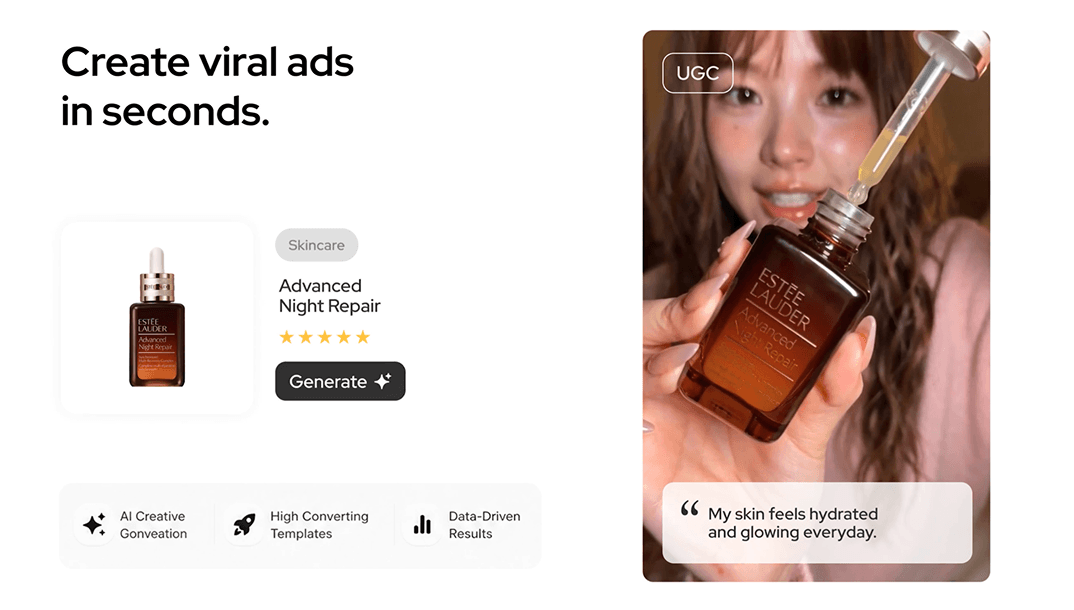
Most UGC testing fails because the videos are too different. One version has a new hook, another has a new presenter, a third changes the product shot, and the team calls the result a test.
UGC video software for ad campaign testing is software that helps teams create controlled creator-style video variants for paid media. Good testing software does not only make content faster. It helps a marketer change one variable at a time so the results can teach something.
What Campaign Testing Actually Needs
A campaign testing workflow needs more structure than a content calendar. In a content calendar, the question is "what should we post?" In an ad test, the question is "what did this variation prove?"
That difference changes the tool requirements. A testing tool should help the team control:
- hook angle
- presenter or avatar
- product proof
- offer wording
- runtime and aspect ratio
- destination page alignment
- naming and export organization
Think of it like a kitchen recipe. If you change the flour, oven temperature, baking time, and pan size at once, you cannot tell what improved the cake. UGC testing works the same way.
Real Tools to Compare
| Tool | Best testing role | Why it helps | Main risk |
|---|---|---|---|
| Creatify | Product-to-ad variant generation | Useful when the team wants many product ad versions from product inputs | Requires claim and brand review |
| Arcads | Presenter and hook variation | Useful for testing AI actors, voices, and talking-head UGC scripts | Can underemphasize product visuals |
| HeyGen | Avatar and localization testing | Useful for comparing presenters and language markets | May feel less native if too polished |
| Captions | Short-form ad production and editing | Useful for quick creative iteration and social formatting | Needs strong creative brief |
| InVideo AI | Script-to-video drafts and repurposing | Useful for broad concept drafts and quick edits | Less specialized for controlled UGC testing |
| Predis.ai | Ecommerce social and ad creative | Useful for product-based social ad systems | May be broader than video-only testing |
| VEED | Editing, subtitles, avatar tools | Useful for finishing, subtitle versions, and lightweight variants | Not a full campaign learning system by itself |
| Soldy Marketing Studio | Product-led UGC ad variants | Useful when product proof and ad format need to stay connected | Needs clear product inputs and hypothesis |
The right choice depends on the variable you want to test. If the variable is presenter delivery, Arcads or HeyGen may be most relevant. If the variable is product framing, Creatify or Soldy is more relevant. If the bottleneck is editing and versioning, Captions, VEED, or InVideo AI may help.
The Three Testing Models
Hook testing
Hook testing changes the first three to five seconds while keeping the product, proof, and CTA fixed. This is the cleanest first test for most UGC campaigns.
Good software should let you create variants such as problem-first, result-first, objection-first, and curiosity-first hooks without rewriting the whole ad.
Presenter testing
Presenter testing compares avatar, AI actor, creator-style voice, or product-only narration. This is where avatar tools become useful, but only if the rest of the ad stays constant.
Product proof testing
Product proof testing changes what the viewer sees: demo, unboxing, before-and-after, comparison, or use case. This is often more important than the presenter. A weak proof shot makes even a strong avatar feel fake.
How to Pick Software by Bottleneck
If the team has too few ideas, use research and competitor analysis before choosing software. If the team has ideas but produces too slowly, use a generation tool. If the team produces quickly but cannot interpret results, fix the test matrix.
Here is the practical split:
| Bottleneck | Better tool category |
|---|---|
| Need many product variants | Product-to-video or ecommerce AI ad tools |
| Need many presenters | Avatar or AI actor tools |
| Need faster edits | Short-form video editors with AI features |
| Need better learning | Creative testing matrix and naming discipline |
| Need more channel fit | Tools with ad-specific export and format control |
This is why generic "best UGC software" lists are often weak. They compare tools without naming the testing job.
What Good Output Looks Like
A useful UGC test set should look boringly organized. The filenames, hooks, products, and CTAs should make the test readable before launch.
| Variant | Product | Hook | Presenter | Proof | CTA |
|---|---|---|---|---|---|
| A | Same SKU | Problem-first | Same avatar | Same demo | Same CTA |
| B | Same SKU | Result-first | Same avatar | Same demo | Same CTA |
| C | Same SKU | Objection-first | Same avatar | Same demo | Same CTA |
This structure is simple, but it prevents the most common mistake: confusing creative volume with creative learning.
Where Soldy Fits in Testing
Soldy Marketing Studio fits campaign testing when the team wants product-led UGC variants rather than generic presenter videos. The Marketing Studio workflow is publicly described around product photos, avatars, modes, and 15-second commercial video generation. That makes it useful when the test needs to keep the product proof visible while changing hooks or formats.
It should not replace media analytics. It helps with the creative production side of the loop: product input, mode selection, avatar or UGC structure, generation, and review. The test still needs clean campaign naming and performance analysis in the ad platform.
Campaign Testing Checklist
Hypothesis
Use one sentence: "If we open with the buyer problem, click-through rate should improve because the audience recognizes the pain faster."
Constants
Keep product, destination page, CTA, and core claim stable.
Variable
Change hook, presenter, proof type, or format. Do not change all of them.
Variant count
Three to five variants are usually enough for an early directional test.
Test record
The ad file name or campaign label should make the test legible later.
FAQ
What is the best UGC video software for ad campaign testing?
The best choice depends on the test variable. Creatify and Soldy are stronger for product-led variants; Arcads and HeyGen are stronger for presenter testing; Captions, VEED, and InVideo AI are useful for editing and fast short-form production.
How many UGC video variants should I test at once?
For a first test, three to five variants around one variable is cleaner than ten unrelated ads. The goal is learning, not volume alone.
Should I test AI avatars or product videos first?
If the product needs explanation, test avatars. If the product needs visual proof, test product-first videos. Many teams should test both against the same offer.
What data should I track for UGC ad tests?
Track the variable changed, spend, impressions, hook rate or thumb-stop proxy, click-through rate, conversion rate, and cost per result. The exact metrics depend on the platform and objective.
Can AI UGC tools run the test for me?
Most tools create or edit the assets. They do not replace campaign setup, statistical judgment, landing page review, or post-test interpretation.
Conclusion
UGC testing is not about making more videos. It is about making comparable videos. Choose software based on the variable you need to test, then keep the product proof stable. For product-led UGC variants, Soldy Marketing Studio is a practical place to start.
Ready to Create with Marketing Studio?
Drop a link, photo, or PDF — get a cinematic video ad in minutes.
Generate My First Ad