Best AI UGC Video Editors for Marketing Agencies
Soldy Team·July 20, 2026·7 min read
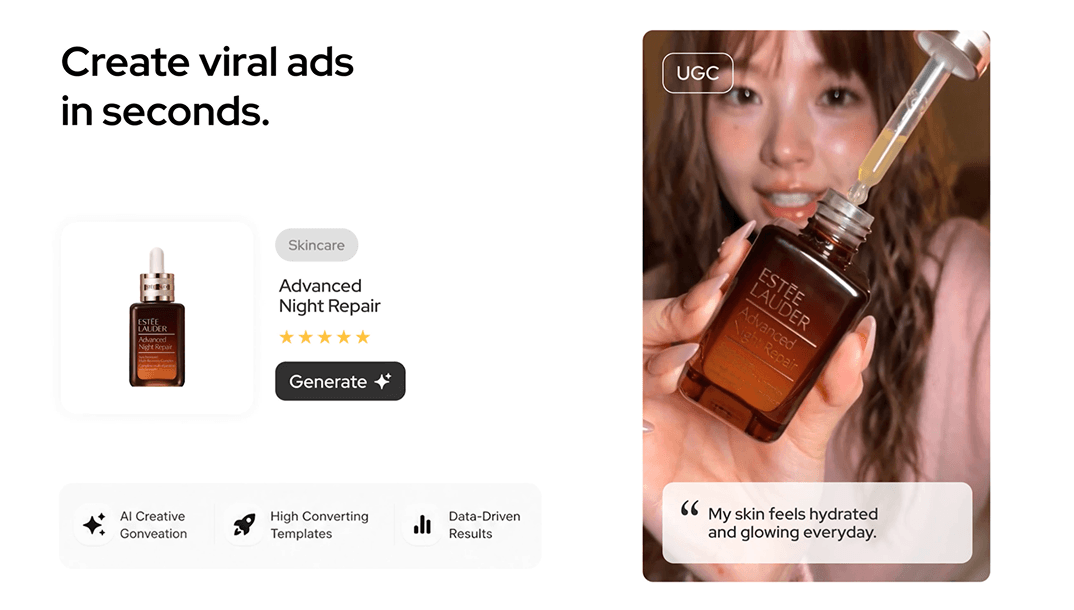
Agency UGC production has a different problem from founder-led production. The challenge is not making one usable ad. The challenge is making enough client-ready variants without losing the brief, the approvals, or the product truth.
AI UGC video editors for marketing agencies are tools that help agencies create, edit, localize, review, and package creator-style video ads for clients. Some are true editors. Some are AI avatar tools. Some are product-led video generators. Agencies usually need a stack, not only one tool.
Quick Pick
| Agency need | Tools to compare |
|---|---|
| Product-led client ad variants | Soldy Marketing Studio, Creatify, Topview AI |
| Talking-head UGC at volume | Arcads, MakeUGC, HeyGen |
| Captions and short-form polish | Captions, VEED |
| Multilingual presenter videos | HeyGen, Synthesia, ElevenLabs |
| Broad drafts and repurposing | InVideo AI, VEED, Captions |
An agency should choose tools around handoff quality. A client does not only need a video file. They need an asset that matches the product page, campaign angle, approval history, and next test.
What Agencies Need That Solo Teams May Not
Agency teams should evaluate AI UGC tools on more than output quality:
- client intake and brief quality
- product input handling
- revision speed
- approval clarity
- brand safety
- export naming
- multi-client organization
- usage rights
- localization support
- ability to make comparable variants
The biggest agency risk is creative drift. A tool can make impressive videos but still create review chaos if every output changes the claim, hook, scene, and CTA at once.
Agency Tool Comparison
| Tool | Agency role | Best for | Watch out for |
|---|---|---|---|
| Soldy Marketing Studio | Product-led ad generation | Client SKUs, ecommerce products, product proof, short variants | Needs organized product inputs |
| Creatify | Product-to-video ads | Turning product URLs or assets into ad concepts | Claims and brand voice require review |
| Arcads | AI actor UGC | Talking-head hook and presenter testing | Product visuals must be planned |
| HeyGen | Avatar and localization | Spokesperson videos, languages, controlled delivery | May be too polished for some UGC briefs |
| Synthesia | Enterprise avatar video | Training, enablement, B2B explainers, polished client communication | Less native for raw performance UGC |
| Captions | Short-form editor | Captions, edits, creator polish, social cuts | Strategy must already be clear |
| VEED | Online video editor | Subtitles, repurposing, quick client revisions | Not a complete generation workflow |
| Topview AI | AI marketing video agent | Product URL, script, and reference-led ads | Product detail accuracy needs QA |
Best by Agency Workflow
Client product intake
If the client sells physical products, agencies should start with product-led tools. Soldy and Creatify are relevant because they keep the product or product page closer to the generation process.
The intake should include product photos, product page URL, target buyer, claim boundaries, offer, forbidden language, and example ads the client likes. Without that, every generated UGC clip becomes a taste debate.
Presenter-led creative
For hooks that need a person speaking to camera, Arcads, HeyGen, and MakeUGC are relevant. They help the agency test tone and delivery without booking creators for every round.
The agency should still pair presenter-led clips with product shots, screen proof, or product context. A client will rarely be satisfied with a beautiful avatar if the product is unclear.
Editing and delivery
Captions and VEED are useful finishing layers. They can help with subtitles, cuts, repurposing, and smaller client revisions. They should not be treated as the strategy layer unless the agency already has a strong brief.
Localization
Agencies handling multi-market clients should compare HeyGen, Synthesia, and ElevenLabs-supported workflows. The QA process should include native speakers, claim review, and market-specific offer checks.
Agency QA Checklist
Client fit
Does the output match the client's brand, claim boundaries, and product page?
Product clarity
Can a cold viewer identify what is being sold in the first few seconds?
Revision path
Can the team change hook, voice, CTA, or format without rebuilding the ad from scratch?
Variant naming
Can the agency label outputs by client, product, hypothesis, platform, and round?
Approval risk
Would legal, compliance, or the client object to any claim, likeness, voice, or use case?
How to Build an Agency Stack
Most agencies should separate the stack into three layers:
| Layer | Job | Example tools |
|---|---|---|
| Strategy and input | Translate client product, audience, claim, and offer into a creative brief | Internal process, creative intelligence, client intake docs |
| Generation | Create product-led, avatar-led, or UGC-style variants | Soldy Marketing Studio, Creatify, Arcads, HeyGen, Topview AI |
| Finishing and delivery | Add captions, resize, edit, export, and package for approval | Captions, VEED, InVideo AI |
This matters because agencies often blame the wrong layer. If the product is unclear, an editor will not fix it. If the script is weak, a better avatar may only make the weak script sound more polished. If the generated asset is strong but not ready for client review, finishing tools become valuable.
Pricing and Client Margin
Agencies should evaluate tools by margin per approved asset, not only subscription price. A tool that costs more but produces client-approved variants faster may be cheaper than a low-cost tool that creates extra revision cycles.
Track three numbers during testing: generation cost, internal review time, and client revision count. The best AI UGC editor for an agency is the one that lowers the combined cost of those three numbers. It should also make the final deliverable easy to explain: what hypothesis the asset tests, which product it supports, and which platform it was built for.
For retainer clients, consistency matters. If the tool changes visual style too much between rounds, the agency may spend more time defending the output than learning from performance. A boringly reliable workflow usually beats a flashy tool that surprises the team every time.
FAQ
What is the best AI UGC video editor for marketing agencies?
For product-led client ads, compare Soldy Marketing Studio, Creatify, and Topview AI. For editing and finishing, compare Captions and VEED. For avatar-led work, compare Arcads, HeyGen, and Synthesia.
Should agencies use one AI UGC tool or several?
Most agencies need several layers: research, product-led generation, avatar or presenter generation, editing, review, and export. One tool rarely covers every client workflow.
Can agencies resell AI UGC videos to clients?
Often yes, but agencies should verify each vendor's commercial usage rights, client licensing terms, avatar permissions, and disclosure or platform-policy requirements.
What matters most for agency UGC workflows?
Repeatability matters more than one impressive render. Agencies need briefs, review history, product accuracy, naming, and revision control.
How should an agency test AI UGC tools?
Use one real client product and one brief across tools. Score first output, revision quality, client fit, product clarity, and total cleanup time.
Final Take
Agencies should not choose an AI UGC video editor only by demo quality. Choose the stack that turns client inputs into reviewable, launchable variants. For product-led client ads, Soldy Marketing Studio is a strong first layer.
Ready to Create with Marketing Studio?
Drop a link, photo, or PDF — get a cinematic video ad in minutes.
Generate My First Ad